Home › Concrete Slab Foundations and Flatwork
Reliable, professional concrete slab in Austin, TX from Superior Concrete Austin. Contact us today for a free on-site estimate.
Superior Concrete Austin provides professional concrete slab throughout Austin, TX, Texas and the surrounding area. Our licensed, insured crew delivers safe, clean, on-time work with a free estimate before anything begins. Call (737) 258-3740 or request your free quote.
Concrete slab foundations built for Austin soil and weather
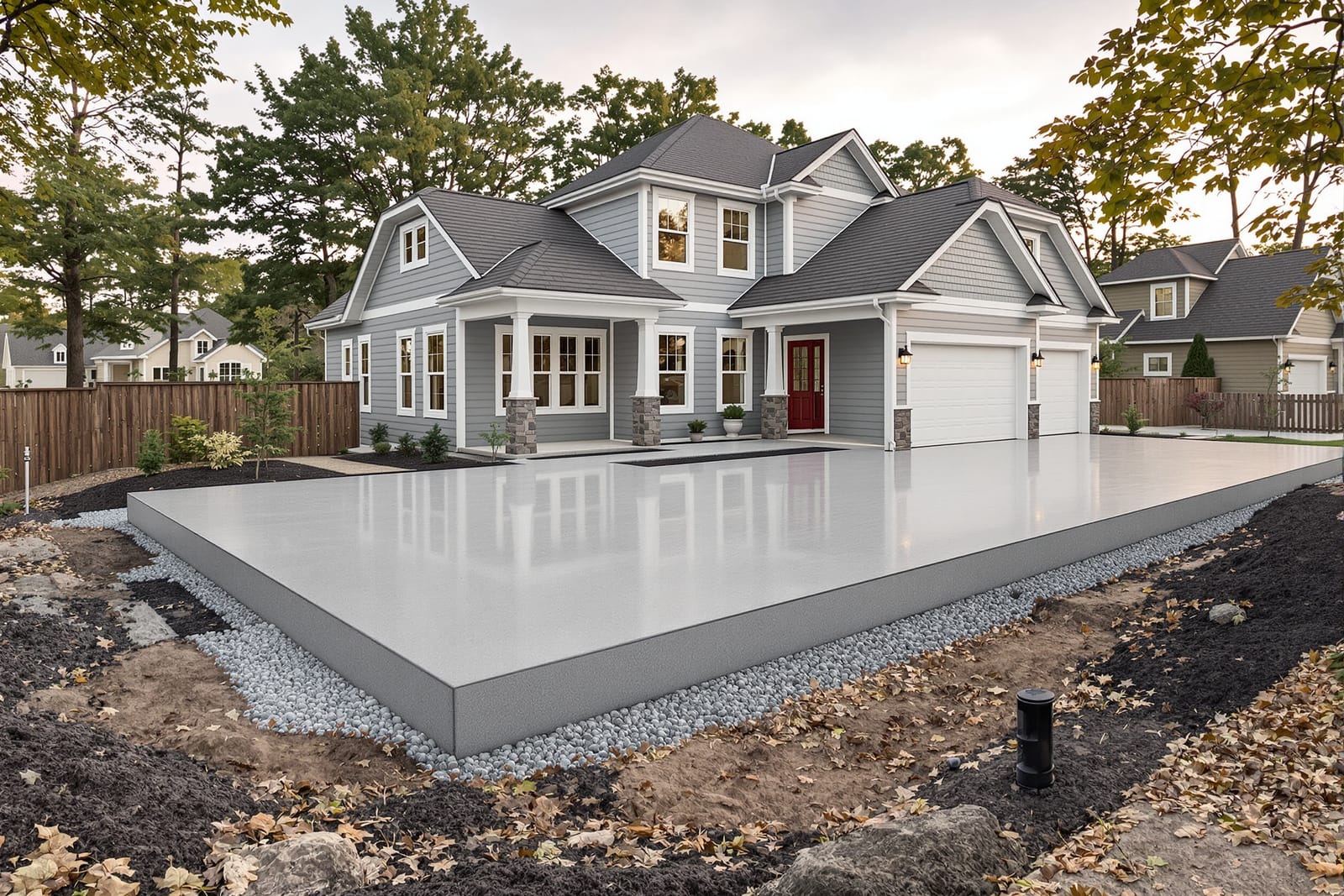
Concrete slab foundations and flatwork in Austin are only as good as the prep that happens before any concrete is poured. At Superior Concrete Austin, we start every slab project by looking at three things specific to Central Texas: soil movement, drainage patterns, and the loads that slab will carry.
Our crews perform a site walk to check slope, low spots, existing cracks in nearby concrete, trees and roots, and where water naturally tries to run during heavy storms. Austin clay soils tend to swell when wet and shrink when dry, which is why you see so many cracked driveways and patio slabs around town. To counter this, we design each concrete slab foundation or flatwork pour with proper base thickness, steel reinforcement, and control joint layout so the slab can handle seasonal movement instead of breaking apart.
We focus on practical solutions. If we see drainage issues that will undermine your slab in a few years, we will recommend grading adjustments, drains, or small retaining changes before we pour. It is cheaper to do it right upfront than to chase settlement and cracks later.
How we build concrete slabs that actually last
A durable concrete slab is the result of a clear sequence of steps, not just the day of the pour. Our standard process at Superior Concrete Austin looks like this:
1) Layout and excavation: We stake out the exact footprint, verify elevations with a level, then excavate or cut down high spots so we can create a uniform base. For foundations and heavy driveways, we typically remove organic material and topsoil to reach stable subgrade.
2) Subgrade compaction and base: We compact the native soil with plate compactors or rollers, then install a base layer of road base or crushed limestone where needed. In many Austin neighborhoods the soil is uneven and mixed with rock, so we adjust thickness and compaction passes based on field density checks rather than guessing.
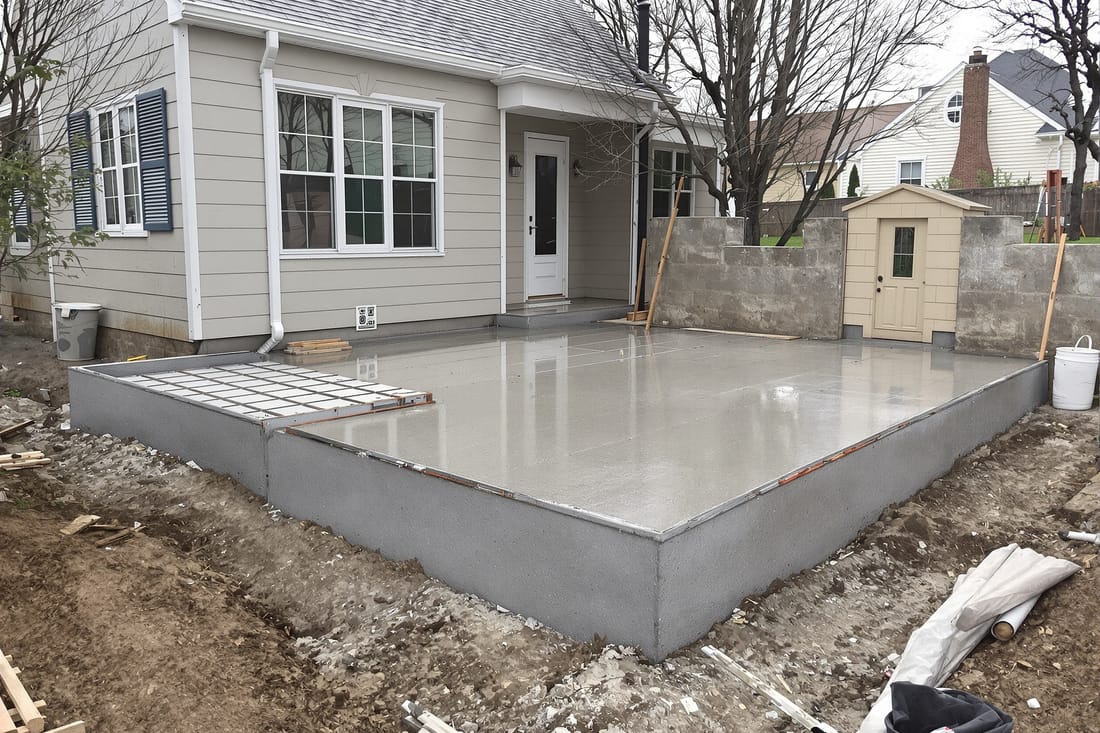
3) Formwork: We build wood or metal forms set to the final finish height, then double check slopes so water sheds away from your house. Around homes, garage slabs, and patios, we stay mindful of thresholds and step heights to keep everything within code and comfortable to walk.
4) Reinforcement and vapor barrier: For foundations and larger flatwork, we place rebar or welded wire mesh in a grid pattern. Typical spacing is 12 to 18 inches, but we tighten that up in high load zones like under columns or where vehicles will park. Where moisture is a concern, like interior slabs or conditioned spaces, we install a polyethylene vapor barrier under the slab.
5) Concrete placement and finishing: We use mixes designed for the Texas heat, usually in the 3,000 to 4,000 psi range, with additives as needed for workability and strength. Our crew places, screeds, bull floats, and trowels the surface, then cuts control joints at the right spacing and depth to guide where any minor cracking occurs.
6) Curing: Instead of walking away after it looks finished, we use curing methods that help the slab gain strength properly, like curing compound or moist curing, depending on conditions. This step is critical in Austin summers, when unprotected concrete can dry too fast and surface crack.
Flatwork options for driveways, patios, walkways, and shop slabs
Concrete slab foundations and flatwork cover more than just house foundations. Superior Concrete Austin handles driveways, parking pads, RV and boat pads, patios, shop and shed slabs, walkways, and AC or generator pads.
Design options include:
• Thickness and reinforcement: Standard residential flatwork is usually 4 inches thick with fiber reinforcement or rebar. For heavy vehicles, RV parking, or shop slabs with equipment, we often move to 5 or 6 inches thick and tighter rebar spacing.
• Surface textures: Broom finish for driveways and walkways provides traction when wet. Trowel finishes look smoother for interior or covered spaces. We can also do light exposed aggregate or add non-slip additives where needed.
• Edges and borders: We can thicken slab edges where loads bear near the perimeter, add integral curbs, or form decorative borders that help separate patios from lawn or bed areas.
• Color and sealer: If you want more than plain gray, we can use integral color or stains, then apply a sealer appropriate for UV and traffic in Austin. Sealers also help resist oil and tire staining on driveways.
Our recommendations are based on how you actually plan to use the slab. A simple garden walkway does not need the same design as a driveway that will hold a loaded work truck every day, and we price and build them accordingly instead of taking a one-size-fits-all approach.
What drives the cost of a concrete slab in Austin
Homeowners often ask why prices for concrete slab foundations and flatwork can vary so much. The final cost is not just square footage. At Superior Concrete Austin, we look at the following key factors and explain them upfront before any work begins.
Access: Tight backyards, limited gate access, or steep lots may require smaller equipment, more manual labor, or concrete pumps. This adds labor and equipment time.
Soil and base prep: Soft spots, expansive clay, or existing poor fill may mean additional excavation and importing base material. If a previous slab failed, we often need to remove more material and rebuild the base correctly.
Thickness and reinforcement: A light-use patio at 4 inches with fiber mix will cost less than a 6 inch slab with rebar grid and thickened edges under load-bearing walls. The more structural demand on the slab, the more steel and concrete we use.
Drainage and grading corrections: Adjusting grades, adding swales, or installing basic drainage to protect your new slab may add to the project cost, but it prevents water problems that can ruin concrete and nearby structures.
Finish choices: Decorative finishes, colored concrete, or complex joint patterns require more labor and skill than a straightforward broom finish.
We provide line-item estimates so you can see where each cost comes from and decide on options based on your budget and priorities, instead of being surprised at the end of the project.
Common slab problems in Austin and how we prevent them
Austin’s combination of clay soils, sudden heavy rains, and long dry spells creates specific issues for concrete slab foundations and flatwork. Superior Concrete Austin sees the same failures repeatedly: edge cracking from poor base prep, random mid-slab cracking due to missing joints or minimal reinforcement, and slabs tilting toward the house because slopes were not set correctly.
To prevent these, we take several practical steps. We compact the base in thin lifts to minimize later settlement, and we are careful about base moisture content, especially in hot months. We place control joints at the correct spacing related to slab thickness, typically keeping joint layouts so that individual panels are as square as practical, which reduces random cracking.
We also design drainage into the slab layout. That means setting slopes away from structures, incorporating drain channels if needed, and avoiding low spots where water can pond and seep under the slab. For foundation slabs and interior work, we pay attention to plumbing penetrations and conduit locations to avoid weak points around those areas.
When a customer calls about an existing slab that is cracked or uneven, we do not automatically recommend replacement. We look at whether the issue is cosmetic, structural, or drainage-related. Sometimes strategic cutting, overlays, or small extensions solve the problem. When replacement is the only sensible option, we explain what failed the first time and exactly how our new design addresses those causes.
What to expect when you hire Superior Concrete Austin
Before any work starts, we schedule an on-site visit to measure, check elevations, inspect soil and existing structures, and talk through how you want to use the slab. After that visit you receive a written proposal that outlines slab thickness, reinforcement type, base preparation, joint layout, finish, and an estimated schedule.
Once approved, we handle permits where required or coordinate with your builder. We mark utilities as needed, set up forms and reinforcement, and schedule concrete delivery for a weather window that gives the slab time to cure properly. During the pour, a lead from Superior Concrete Austin is on site, monitoring slump, placement, and finish so decisions get made in real time, not guessed later.
After the pour, we manage curing and advise you on when you can walk on, park on, or build on the slab. For example, light foot traffic is usually fine after 24 hours, but we generally recommend waiting at least 7 days before parking vehicles and 28 days before placing heavy structures, so the concrete can reach design strength.
We leave you with practical maintenance tips, like how often to reseal exterior flatwork in Austin’s climate, how to manage drainage around the slab over time, and what minor hairline cracks are normal versus what should prompt a call to us. Our goal is a concrete slab foundation or flatwork project that performs reliably for years, not just something that looks good for a few weeks.