Home › Concrete Foundations and Footings
Superior Concrete Austin installs reliable concrete foundations and footings for residential projects in Austin, TX. We handle layout, excavation, forms, and rebar to support new homes, additions, and heavy structures. Protect your investment with foundations poured to local codes and engineering requirements.
Superior Concrete Austin provides professional concrete foundations throughout Austin, TX, Texas and the surrounding area. Our licensed, insured crew delivers safe, clean, on-time work with a free estimate before anything begins. Call (737) 258-3740 or request your free quote.
Concrete foundations in Austin built for local soil and Texas weather
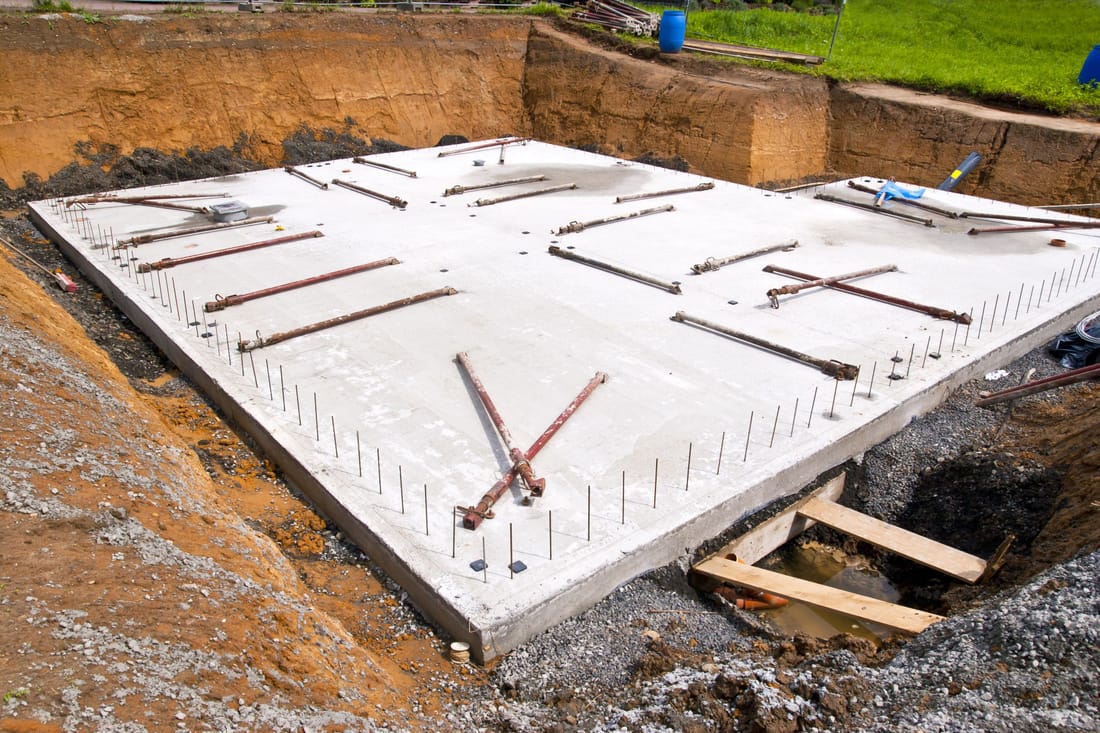
When you hire Superior Concrete Austin for concrete foundations and footings, you are getting a team that designs specifically for Central Texas clay soils, sudden storms, and long dry spells. We are not just pouring a slab and leaving. We are making sure your home, garage, shop, or addition has a foundation that can handle the way Austin ground actually moves.
The first thing we look at is your site. In many Austin neighborhoods, you will see a mix of expansive clay, caliche, and rocky patches even on a single lot. We walk the property, review slope and drainage, and discuss how you plan to use the structure. A backyard workshop on a level lot in South Austin will need a different approach than a two-story addition on a sloped lot in Westlake. That local context is what keeps foundations from cracking or settling unevenly a few years down the road.
We also coordinate with your engineer or provide one if you do not have one yet. In Austin, most structural plans call for specific footing sizes, rebar patterns, beam depths, and slab thicknesses based on the home’s weight and soil conditions. Superior Concrete Austin follows those details closely and communicates any field changes, such as deeper beams needed for softer pockets of soil or additional piers near heavy load areas like fireplaces and large windows.
Our step-by-step process for concrete foundations and footings
Our foundation work starts with layout. We pull strings and use lasers to mark exactly where footings, grade beams, and thickened edges will go relative to your property lines and your architectural plans. Getting this right prevents headaches later when framing starts and doors, windows, and utilities must align.
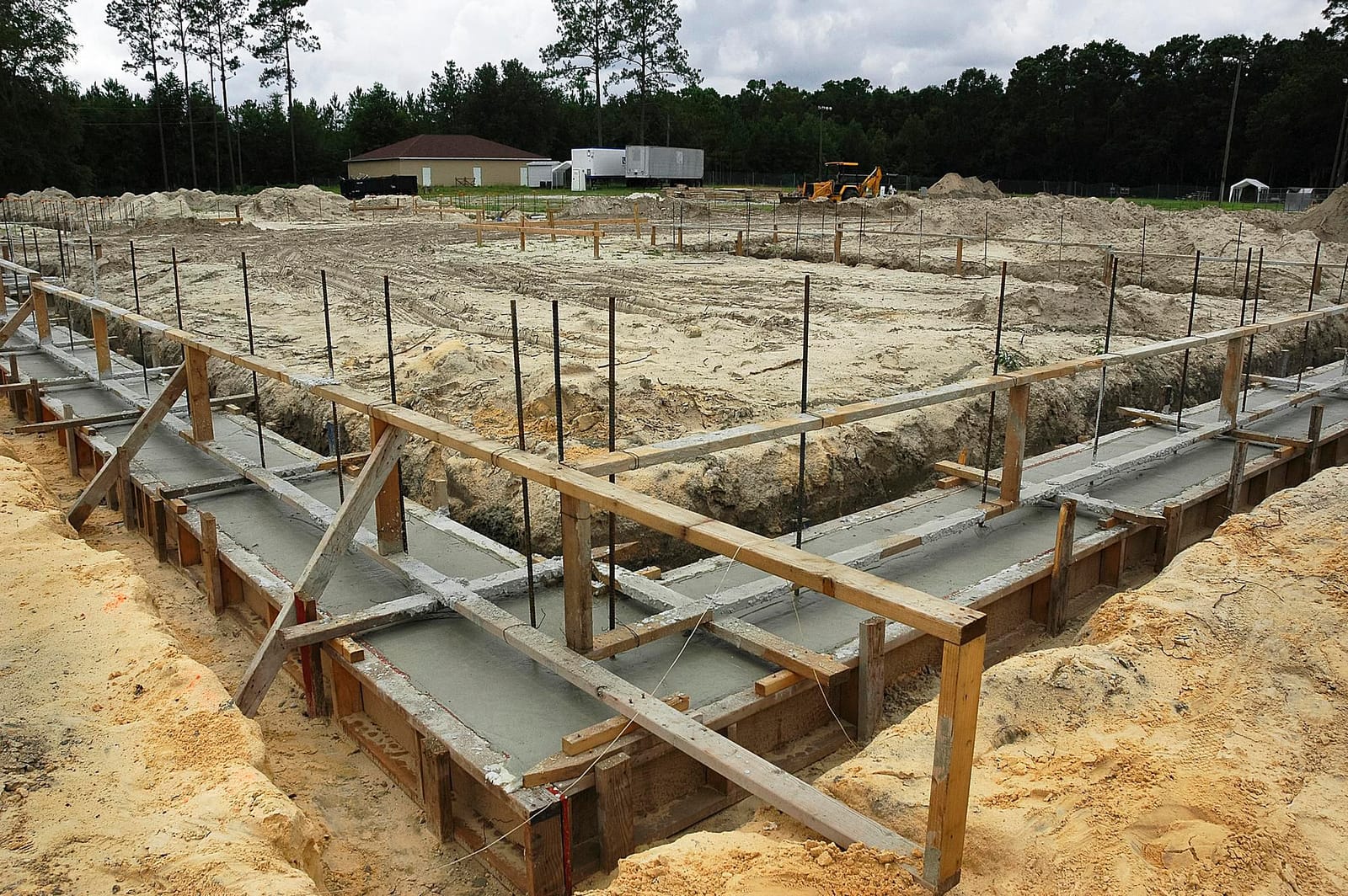
Next, we excavate for footings and beams. In much of Austin, that means cutting into clay and occasionally chipping through limestone. We dig to the engineer-specified depth, then clean out loose soil so concrete bonds well. For homes on steeper lots or areas with known soil movement, we will also install concrete piers or drilled shafts, which transfer loads deeper into more stable layers.
Then we form the foundation. We build straight, sturdy forms that set the final elevation of your slab so water drains away from the building and not toward it. It is especially important in Austin because sudden heavy rains can overwhelm poorly graded sites. At this stage we also coordinate plumbing rough-in, electrical conduits, and any sleeves needed for future utilities so these are locked into place before concrete is placed.
Rebar installation is what ties the whole foundation together. We install steel according to plan, including grade beams, footings, and slab reinforcement. This might be a combination of #3, #4, and #5 bars, tied on proper chairs to hold them at the correct height. Around columns, load bearing walls, and garage door openings, we often add extra steel because those spots see higher stresses. We double check spacing, overlaps, and clearances before any concrete truck arrives.
Concrete mixes, finishing options, and how we handle Texas heat
Superior Concrete Austin typically uses ready mix concrete in the 3,000 to 4,000 psi range for residential foundations, with adjustments based on engineer specs and site conditions. For example, we may order a higher strength mix or special additives when the design calls for thinner beams or when we are working on a tight site where access is limited and we cannot easily redo work.
Austin heat can cause concrete to set faster than expected, which can lead to cracking if it is not managed carefully. We plan pour times in the early morning when possible, coordinate truck spacing so we are not rushed, and sometimes specify retarding admixtures that slow down the set time. On windy, hot afternoons, we use curing methods that keep moisture in the slab, such as curing compounds or light water misting, so the surface does not dry out too quickly.
Footings and foundations often get ignored after framing begins, but there are finishing choices that matter long term. For garages, shops, and accessory structures, we can trowel the surface to a smooth or light broom finish, add control joints that reduce random cracking, or thicken edges at garage door openings that see vehicle traffic. If your slab will remain exposed, like in a workshop or modern-style home, we can discuss options to keep the finish consistent so it can later be polished or sealed.
For homes or additions near creeks or low spots, we pay careful attention to slab elevation. Lifting the finished floor just a few extra inches can make the difference between staying dry and dealing with water during heavy storms. That elevation is locked in when we set forms and order concrete, so we make sure you are comfortable with it before the pour.
Cost factors and how to compare foundation bids in Austin
Many Austin homeowners are surprised that two foundation bids for the same project can look very different. The reason is that not every contractor includes the same level of detail or builds to the same standard. At Superior Concrete Austin, we try to spell out what you are getting so you can make a fair comparison.
Major cost drivers include excavation depth and complexity, the amount of rebar and beams required, the thickness and square footage of the slab, and whether piers or drilled shafts are needed. Rocky or hard ground can increase equipment time, and tight access lots where we must pump concrete instead of backing trucks directly can also change the price.
When you look at proposals, check if the contractor is following engineered plans, what psi concrete they are using, how thick the slab is at the main field, and how deep the perimeter and interior beams are. Ask whether they are including moisture barrier, reinforcing chairs (not just rebar laid on the ground), and proper curing. A lower price that skips some of these items can cost far more later in repairs.
We are happy to walk you through our estimate line by line. If you already have another bid, we can review the scope with you and point out differences. Our goal is not just to win the job, it is to help you understand what you are buying so your concrete foundations and footings support your structure for decades, not just through the first warranty period.
Common foundation issues in Austin and how we prevent them
Austin homeowners often hear about slab cracks, doors sticking, or floors dropping in one corner of the house. Most of these problems trace back to a combination of expansive clay soils and inconsistent foundation design or construction. At Superior Concrete Austin, we tackle these risks during planning instead of waiting for repairs later.
One common issue is inadequate drainage around concrete foundations. If water ponds near the slab, clay swells and puts uneven pressure on the concrete. When things dry out, the soil shrinks and the slab can settle. To prevent this, we pitch the top of the slab correctly, coordinate with your grading or landscaping plan, and make sure there are clear paths for water to get away from the structure.
Another problem is rebar that is too close to the soil or left unsupported. Over time, this can lead to corrosion or weak spots in the slab. Our crews use proper chairs and spacers, keep steel the right distance from the surface, and check that all reinforcement is embedded where it should be before the pour starts. We invite owners and builders to walk the site with us before we order concrete so everyone is comfortable with the work.
Finally, we watch for rushed pours and poor finishing practices. Pouring too much slab area at once, not tooling control joints, or finishing while bleed water is still on the surface can lead to cracking and weak top layers. Our team sizes the crew for the pour area, uses proper joint spacing suited to the slab thickness, and follows a controlled finishing and curing process. This is how we build concrete foundations and footings in Austin that stay stable through cycles of heat, rain, and drought.