Home › Garage and Basement Concrete Floors
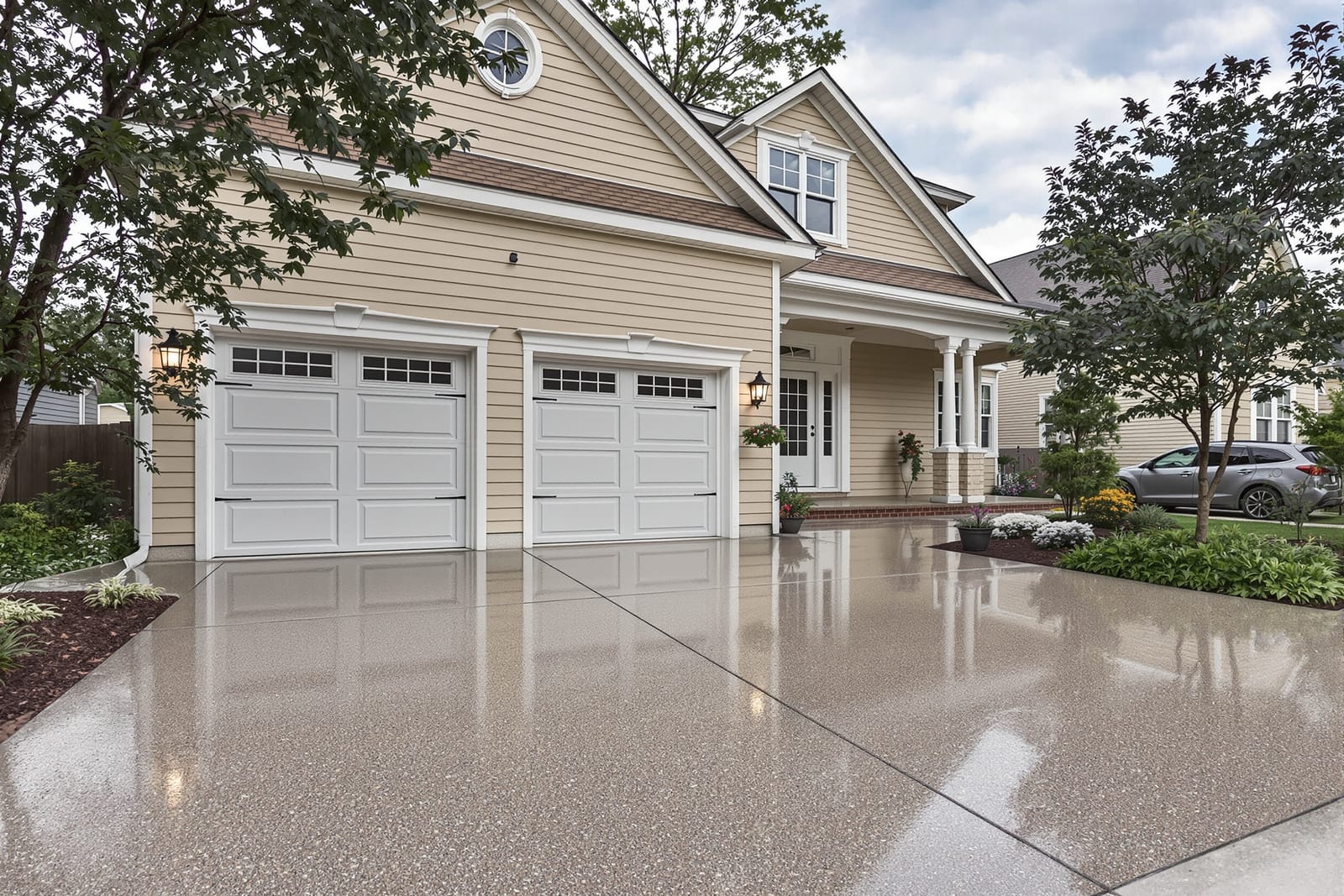
Superior Concrete Austin pours smooth, level concrete garage and basement floors for homeowners in Austin, TX. We install new slabs and replace damaged floors with reinforced concrete that resists cracking and staining. Get a clean, durable surface that stands up to vehicles, storage, and everyday use.
Superior Concrete Austin provides professional concrete garage floor throughout Austin, TX, Texas and the surrounding area. Our licensed, insured crew delivers safe, clean, on-time work with a free estimate before anything begins. Call (737) 258-3740 or request your free quote.
Concrete Garage & Basement Floors Built for Austin, TX Homes
Superior Concrete Austin installs concrete garage floors and basement slabs that hold up to real daily use in Central Texas. We focus on the details that matter in Austin: heat, occasional hard rains, expansive clay soils, and the way local homes are actually used.
For most homeowners here, the garage is more than parking. It is storage, a workshop, a fitness space, or sometimes a laundry area. The floor has to resist hot tires, dropped tools, and the fine dust our soil creates. In basements and walkout lower levels, the slab needs to stay level and resist moisture so finish flooring and storage stay in good shape.
When you call Superior Concrete Austin about a concrete garage floor, we do not jump straight to a price. We start with a short walkthrough on site, looking at access for trucks, the current slab if there is one, drainage outside the doors, and any cracks in nearby concrete that hint at soil movement. That inspection helps us choose the right slab thickness, reinforcement, and joint layout for your specific property in Austin, not just generic specs from a book.
How We Install a Durable Concrete Garage Floor or Basement Slab
A long lasting concrete garage floor starts with base prep, not the concrete truck. We remove any loose material and organic soil, then compact the subgrade with a plate compactor or roller. In many Austin neighborhoods, especially with clay-heavy soils, we add a compacted gravel base to help with drainage and reduce heaving. For basements and conditioned spaces, we typically place a vapor barrier over the base to limit moisture coming up through the slab.
Formwork comes next. We set sturdy forms to the right elevation, checking slopes toward the garage door so water and spilled liquids do not run back toward the interior. In basements, the goal is usually a level slab with tight elevation tolerance, especially if you plan tile, LVP, or polished concrete.
Reinforcement depends on load and soil. For a standard residential concrete garage floor in Austin, we commonly pour a 4 inch slab using 3000 to 4000 psi concrete with either #3 rebar on a grid or 6x6 welded wire mesh. For heavy trucks, equipment, or car lifts, we often go thicker (5 or 6 inches) in specific areas and tighten the rebar spacing. In basements, we tailor reinforcement to foundation design and any point loads from interior walls or columns.
We then schedule the concrete pour early in the morning when temperatures are cooler. This matters in Austin because hot weather accelerates set times and can increase cracking if the concrete is not managed correctly. We place the mix, vibrate or rod around edges and reinforcement to remove air pockets, and screed it to grade. After screeding, we bull float to bring up fines for finishing, then wait for bleed water to evaporate before troweling. Cutting control joints at the right spacing and depth before the slab fully hardens helps control where any shrinkage cracks form.
Finish Options for Concrete Garage Floors and Basements
A plain troweled finish is still the most common choice for a concrete garage floor, but Austin homeowners are asking for more options, especially if the garage or basement will double as workspace or living area. Superior Concrete Austin walks you through what each finish means for cost, slip resistance, and maintenance.
For garage floors, light broom finishes offer better traction if you regularly wash cars inside or bring in wet vehicles during storms. This is a good fit if you want to keep costs down and do not mind a more utilitarian look. If you want a smoother surface that is easier to sweep and mop, we use steel trowels or power trowels to create a tighter finish, then can add a clear sealer after curing to resist oil and stain penetration.
For basements and converted garages, we can polish the concrete to expose a light or heavy amount of aggregate, then densify and seal it. Polished concrete is popular in modern Austin remodels because it is low maintenance, works with radiant or forced air conditioning, and does not trap dust like carpet. Stains and dyes can add color variations, from light grays that brighten a basement to warm earth tones.
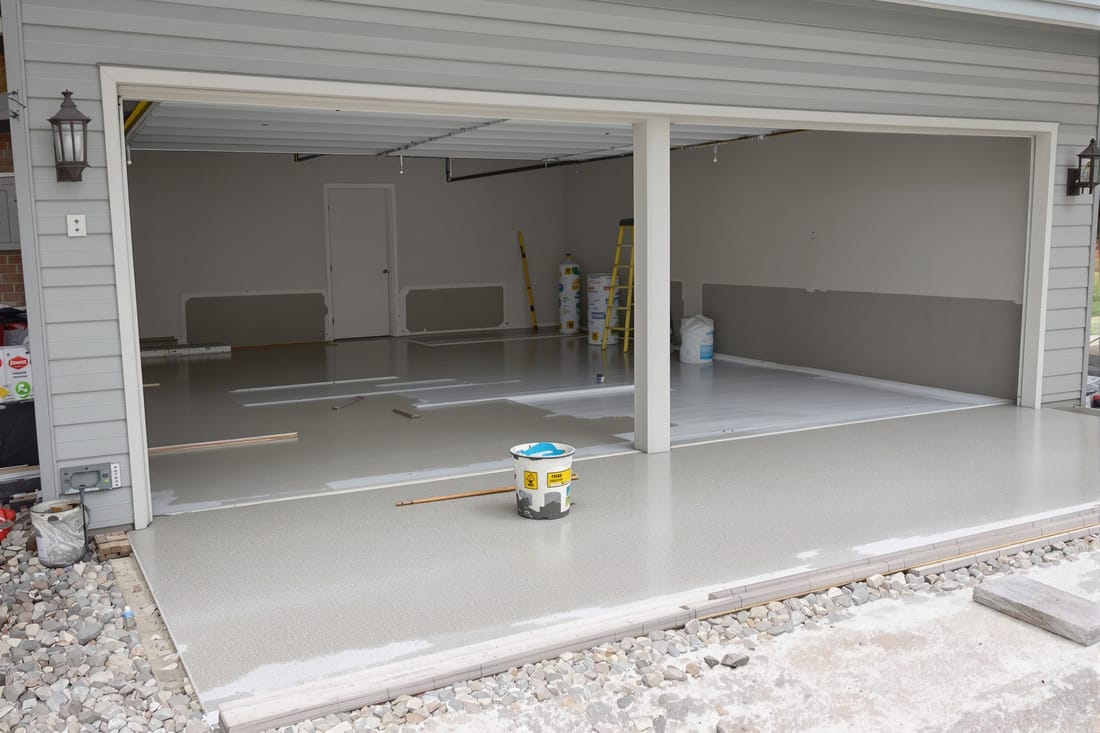
We also install epoxy and polyaspartic coatings on existing or new concrete garage floors, but we are honest about what is needed to make them last. Proper surface grinding, moisture testing, and crack repair come first. In areas with higher ground moisture or where the existing slab has no vapor barrier, we may recommend a breathable sealer instead of a thick film coating to reduce the risk of peeling in Austin humidity.
What Drives Cost and How We Prevent Common Problems
The cost of a new concrete garage floor or basement slab in Austin depends on several real factors, not just square footage. Slab thickness, reinforcement type, finish quality, removal of the old slab, and site access all affect pricing. If our crew has to wheelbarrow concrete through a tight side yard or work around steep driveways, labor time goes up. If you need thicker concrete for heavy loads, more reinforcement, or upgraded finishes like polishing or integrated color, material and labor costs increase accordingly.
Soil conditions around Austin also matter. In areas with expansive clays, we may recommend more robust base prep, thicker slabs, or closer joint spacing to reduce movement. Skipping these steps might save a little upfront but often leads to cracks, lifted slabs, or door alignment problems later.
The most common problems we are called to fix on concrete garage floors are surface scaling from improper finishing, random cracking from missing or poorly placed control joints, and moisture issues in basements. To prevent scaling, we avoid adding water to the surface and do not finish while bleed water is present. To control cracking, we cut joints at the right time, usually within 6 to 18 hours of the pour depending on temperature, at a depth of at least one quarter of the slab thickness. For basements and lower levels, we recommend vapor barriers, good perimeter drainage, and sometimes moisture mitigation coatings if tests show higher vapor emission.
Superior Concrete Austin will explain those choices in plain language, with actual numbers and examples from past Austin projects, so you understand what you are paying for and how it protects your home long term.
What Austin Homeowners Should Know Before Hiring a Concrete Contractor
Before you hire anyone to install a concrete garage floor or basement slab, there are a few specific questions you should ask that apply directly to Austin, TX conditions.
Ask about mix design and reinforcement. A contractor should be able to tell you the psi of the concrete, the planned slab thickness, and whether they will use rebar, wire mesh, or fiber reinforcement. For most garages here, you should hear something in the 3000 to 4000 psi range and a clear plan for where any extra thickness is needed under load points.
Ask how they handle hot weather pours. In our climate, it is important to pour early when possible, use proper curing methods, and protect the slab from rapid drying. At Superior Concrete Austin we routinely apply curing compounds or use wet curing methods, especially on basement slabs or floors that will later receive tile or other tight tolerance finishes. Proper curing reduces curling, helps the concrete reach design strength, and cuts down on surface dusting.
Ask for examples of local work on similar homes. A contractor who regularly installs concrete garage floors in Austin should be able to point to neighborhoods and situations like yours, for example sloping driveways near the Hill Country, tight infill lots in central Austin, or newer subdivisions with expansive clay issues. We are happy to explain what we did in each case, such as how we handled drainage at the garage doors or tied new slabs into existing foundations.
Finally, confirm what is included in the proposal: demolition and haul off of old slab if needed, base prep, vapor barriers for basements, reinforcement details, joint layout, finish type, and curing method. A clear scope reduces surprises for both sides and gives you confidence that your new concrete garage floor or basement slab will perform the way you expect.