Home › Commercial Concrete Sealing and Surface Treatments
Reliable, professional commercial concrete sealing in Austin, TX from Superior Concrete Austin. Contact us today for a free on-site estimate.
Superior Concrete Austin provides professional commercial concrete sealing throughout Austin, TX, Texas and the surrounding area. Our licensed, insured crew delivers safe, clean, on-time work with a free estimate before anything begins. Call (737) 258-3740 or request your free quote.
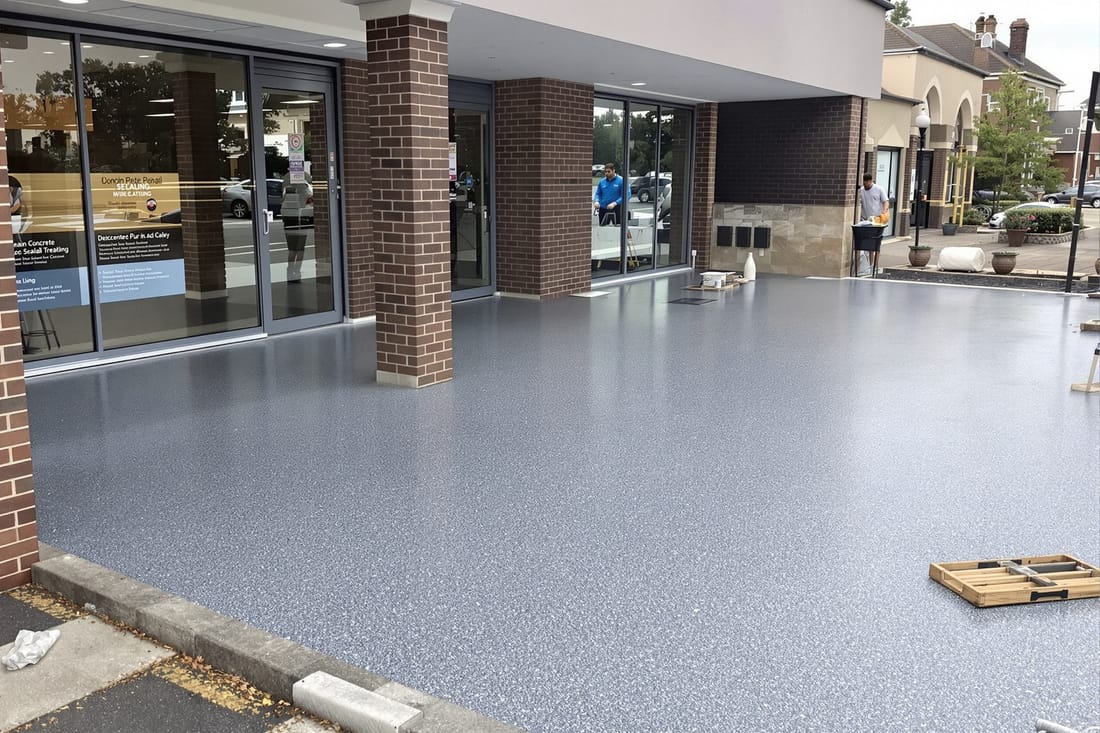
Commercial Concrete Sealing for Austin Businesses
Superior Concrete Austin provides commercial concrete sealing and surface treatments tailored to the way Austin properties are actually used: high foot traffic around offices and retail centers, delivery routes behind warehouses, and heavy vehicle loading at industrial and multifamily sites. Instead of a one size fits all sealer, we evaluate how each slab is performing and what it needs to handle over the next 5 to 10 years.
We work on parking lots, loading docks, warehouse floors, restaurant patios, walkways, garages, dumpster pads, and drive lanes across Austin and nearby communities. Our team understands what local conditions do to concrete, from hot Central Texas summers and UV exposure to occasional freezes and staining from food, oil, or irrigation water high in minerals. Every recommendation starts with those realities, not just a product brochure.
Whether you manage a small retail strip in South Austin or a large industrial complex in Pflugerville, our goal is to improve safety, reduce maintenance, and protect your concrete investment with the right commercial concrete sealing strategy.
How Our Concrete Sealing Process Works On Your Property
Good results depend on preparation. Before we talk about which sealer to use, we walk the site with you and inspect the concrete. We look for hairline and structural cracks, surface scaling, old coatings, curing compounds, efflorescence, and existing stains. We also ask how the space is used, such as pallet jack traffic in a warehouse or hot grease exposure near a restaurant back door.
Next, we perform mechanical and chemical cleaning. Depending on the surface, we may use commercial pressure washing with controlled PSI, scrubbers, and biodegradable cleaners that break down oil and organic buildup without harming landscaping. For interiors, we rely more on auto scrubbers, vacuums, and dust control to avoid tracking debris into occupied areas.
If the slab has old failing sealer or coatings, we mechanically profile the surface. This might mean shot blasting, grinding, or light scarifying so the new sealer can bond properly. We choose the profiling method that meets the sealer manufacturer’s specification for concrete surface profile (CSP) while respecting your schedule and dust concerns.
Only after the surface is clean, dry, and profiled do we apply the sealer or surface treatment. We use sprayers, rollers, or squeegees depending on product and layout. For occupied businesses, we often stage the work in sections to keep at least one entry or lane open whenever possible, and we clearly mark off wet areas so staff and customers stay safe.
Types of Commercial Concrete Sealers and Treatments We Offer
Commercial concrete sealing is not one product. Different areas on the same property may require different treatments.
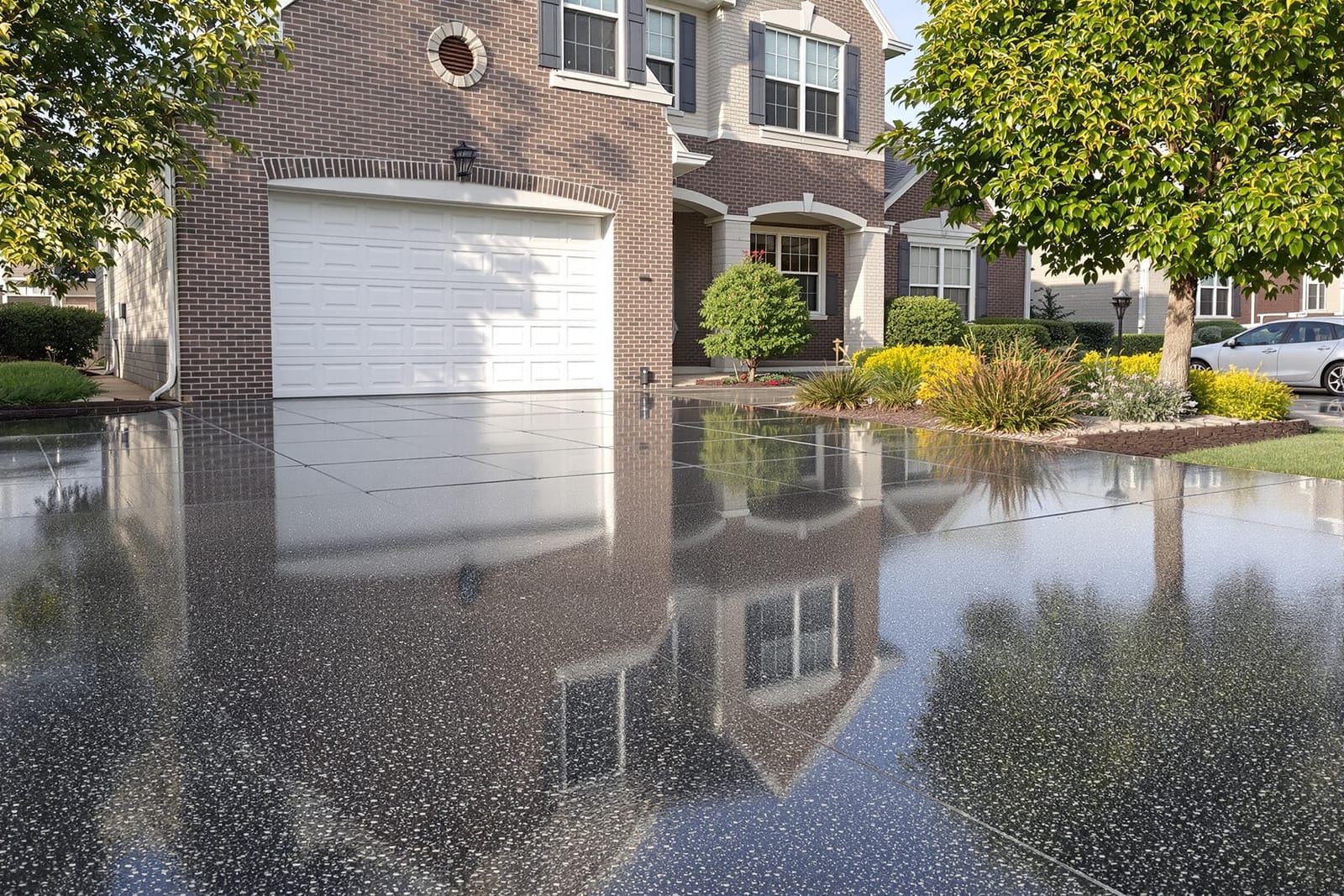
For exterior flatwork such as parking lots, drive lanes, and sidewalks, we typically recommend penetrating sealers like silane or silane/siloxane blends. These soak into the concrete and repel water and deicing chemicals without leaving a film on top. In Austin, this helps protect against moisture intrusion and occasional freeze thaw cycles, and it also cuts down on efflorescence and spalling over time.
For decorative or high visibility areas such as restaurant patios, retail entries, and exposed aggregate or stained concrete, we may use acrylic or urethane topical sealers. These can enrich color and provide a uniform sheen. Where slip resistance is critical, such as sloped walkways or around pools, we can broadcast fine aggregates into the sealer for more traction rather than leaving a slick surface.
For industrial floors, distribution centers, and shops, we often recommend densifiers and hardeners along with guard coatings. Lithium or sodium based densifiers react with the concrete to make the surface tighter and more abrasion resistant, especially useful where forklifts and pallet jacks operate. Guards can then be applied to provide additional stain resistance and easier dust control.
We also handle specialty treatments, including chemical resistant coatings for mechanical rooms or service bays, water repellent treatments for vertical concrete like parking garage walls, and re sealing programs for previously treated decorative slabs.
Addressing Common Concrete Problems Before Sealing
Sealing over problems simply locks them in, so Superior Concrete Austin focuses on fixing issues before we apply any treatment.
Cracks are one of the most common issues we see on Austin commercial sites, particularly on older strip centers and apartment complexes built in the 1980s and 1990s. For shrinkage and hairline cracks, we often use low viscosity crack fillers that penetrate and bond within the crack, stabilizing it before sealing. For wider or structural cracks, we may need to route and seal them with flexible joint sealants or perform partial depth repairs.
Where concrete has spalling, scaling, or pop outs, we remove weak material and rebuild the surface using compatible repair mortars or patching compounds. This step is especially important in areas that see wheeled traffic, such as loading zones and handicap ramps. If repairs are not done right, they will telegraph through any sealer or coating.
Oil soaked concrete, which is common in parking lots around North Lamar and near older industrial parks, requires specific degreasers and sometimes hot water extraction. We explain what level of stain removal is realistic. Some deep petroleum stains can be reduced but not entirely erased, which may influence whether we recommend a clear penetrating sealer or a pigmented coating system to help visually unify the area.
We also check drainage patterns. Standing water drastically reduces sealer life. If we see chronic puddling, we may propose minor corrective work such as grinding high spots or patching low spots before sealing so the treatment can perform as intended.
What Affects Cost for Commercial Concrete Sealing in Austin
Prices for commercial concrete sealing and surface treatments in Austin vary based on several practical factors, and we walk property managers through these details so there are no surprises.
The first driver is square footage and layout complexity. A wide open warehouse floor is more efficient than a small retail center with lots of columns, steps, and tight corners that require more hand work. Access matters too, since upper level parking decks or tight urban sites can require additional labor or equipment.
Surface condition is the next major factor. Concrete that is relatively clean and sound may only need washing and minor patching before sealing. On the other hand, surfaces with heavy oil contamination, multiple layers of old sealer, glue residue from past floor coverings, or significant cracking will take more time and products to prepare.
Product choice also influences cost. High performance industrial coatings or penetrating sealers with longer life expectancies typically cost more per gallon but can reduce your long term maintenance budget. We outline the life cycle costs so you can compare a lower cost, shorter life option versus a more robust system.
Finally, project timing and phasing affect pricing. Night or weekend work in busy parts of Austin, or tight turnaround schedules between tenant changes, may include off hours labor. We work with you to prioritize entrances and key traffic routes so you can balance convenience with cost.
How We Minimize Disruption for Austin Businesses
Superior Concrete Austin is used to working around the schedules of offices, restaurants, medical clinics, and industrial facilities. Before we start, we coordinate with your team to identify peak times, delivery windows, and any special access needs. We can often schedule higher impact steps like grinding or initial cleaning during off hours, then apply sealers when traffic is light.
Clear communication is key. We provide a simple schedule that shows which areas will be closed and for how long, as well as curing times before light foot traffic and vehicle traffic can resume. For example, some sealers are ready for walking in a few hours, while others need a longer window before vehicles can return. We post signage and use barricades or cones to keep people off wet surfaces.
Inside buildings, we pay close attention to ventilation and odor. When low odor or low VOC products are important, such as in medical settings or occupied offices, we select systems designed for those environments and may use fans or temporary barriers to help direct airflow.
We also leave the job site clean and ready for use. That means no leftover tape, overspray on doors or landscaping, or unmarked hazards. Our crews are trained to be respectful of tenants and customers, because many of our projects come from long time relationships with Austin property managers who value low stress projects as much as the final result.
Maintenance, Lifespan, and When to Reseal
Commercial concrete sealing is not a one time event. To make the most of your investment, it helps to understand realistic lifespans and simple maintenance practices.
In Austin’s climate, quality penetrating sealers on exterior flatwork typically last 3 to 7 years, depending on traffic levels, UV exposure, and how well the surface is cleaned. Decorative topical sealers may need reapplication every 2 to 4 years, especially in high traffic restaurant and retail areas. Industrial systems vary, but densified and guarded floors can perform well for many years with proper scrubbing.
We provide each client with basic care guidelines tailored to the treatment we install. For example, we recommend neutral pH cleaners for sealed floors instead of harsh acids or highly alkaline products that can strip or dull finishes. We also advise on appropriate snow and ice products if needed, and point out which deicers can be hard on concrete.
It is smart to schedule periodic inspections, often at the same time as your general property walks. We can spot early wear patterns, especially where vehicles turn, where water regularly drips from downspouts, or at heavily used entry points. Catching these areas early lets us touch up or selectively reseal sections instead of waiting for widespread failure.
If you are unsure whether your concrete needs resealing, we can perform simple on site tests, such as water beading checks on exterior slabs or tape pull and gloss measurements on coated surfaces. From there, we provide a straightforward recommendation, whether that means immediate work, monitoring for another year, or planning a future capital improvement.
Superior Concrete Austin is available to design a maintenance cycle that fits your budget and operating schedule, so your commercial concrete surfaces stay protected, safe, and professional looking year after year.